YEAR
2019
CITY
MOSCOW
SERVICE
CONTENT DEVELOPMENT
THE BRIEF
The Slovo Museum of Slavic Writing was conceived as a large-scale cultural institution dedicated to the history of writing, language, and communication systems across Slavic civilisation.
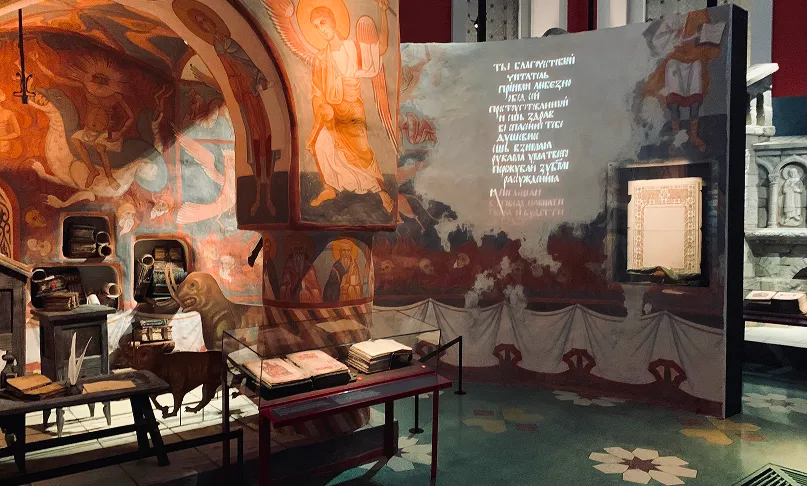
Located inside a listed building, a restored pavilion at VDNKh in Moscow, the museum was designed not simply as an exhibition about alphabets or manuscripts, but as a public interface exploring how writing systems fundamentally transformed human memory, religion, governance, education, and cultural identity.
The institution required a contemporary narrative framework capable of translating linguistic history — an inherently abstract and invisible subject — into an emotionally engaging spatial experience accessible to broad audiences. Pitch was commissioned to develop the multimedia exhibition complex, immersive installations, audiovisual content, interactive systems, and spatial storytelling environments integrating historical artifacts, language systems, and communication technologies into one coherent visitor journey.
MY ROLE
I served as Creative Director, Curator, Head Researcher, and Lead Scriptwriter for the multimedia exhibition complex, leading the development of the museum from conceptual strategy through implementation.
My role focused on translating highly abstract linguistic, historical, and symbolic systems into a coherent spatial storytelling framework capable of engaging broad public audiences while preserving intellectual depth and cultural nuance.
I developed the narrative architecture and interpretive logic connecting language, religion, typography, memory, statehood, and communication technologies into one integrated visitor experience. I also directed the research and scriptwriting teams and supervised the development of multimedia, audiovisual, interactive, and immersive content across the exhibition.
In close collaboration with historians, linguists, designers, multimedia artists, and technical specialists, we developed an exhibition environment where architecture, media, typography, sound, and narrative functioned together as one communication system.
THE CHALLENGE
Language is one of the foundational infrastructures of civilisation, yet it is almost impossible to exhibit directly.
Visitors encounter writing every moment of their lives while rarely perceiving alphabets, symbols, and linguistic systems as technologies that shape thought, memory, power, religion, and collective identity. The challenge was therefore not simply educational, but conceptual: how do you make language itself spatially and emotionally legible?
The project also needed to bridge radically different temporal and cultural layers simultaneously: oral tradition, sacred writing, manuscript culture, printing technologies, state formation, and contemporary communication systems.
Rather than reducing linguistic history to academic chronology, the museum required a narrative architecture capable of revealing writing as a living operating system of civilisation itself.
Another challenge emerged from the symbolic weight of the subject. Slavic writing systems are deeply connected to questions of religion, national identity, collective memory, and cultural continuity. The exhibition therefore needed to balance historical rigor, emotional accessibility, and contemporary multimedia interpretation without collapsing into either nostalgia or purely scholarly presentation.


THE APPROACH
The conceptual move was to treat writing not as text, but as infrastructure. Rather than organising the museum around historical artifacts alone, the exhibition was structured as a spatial narrative exploring how communication systems reshape human perception, social organisation, religion, memory, and statehood across centuries.
Narrative architecture was designed around the transformation of language from sacred symbol into civilisational operating system. Visitors move through immersive environments where alphabets evolve from oral culture into manuscript traditions, religious transmission, printing technologies, political systems, and contemporary media realities.
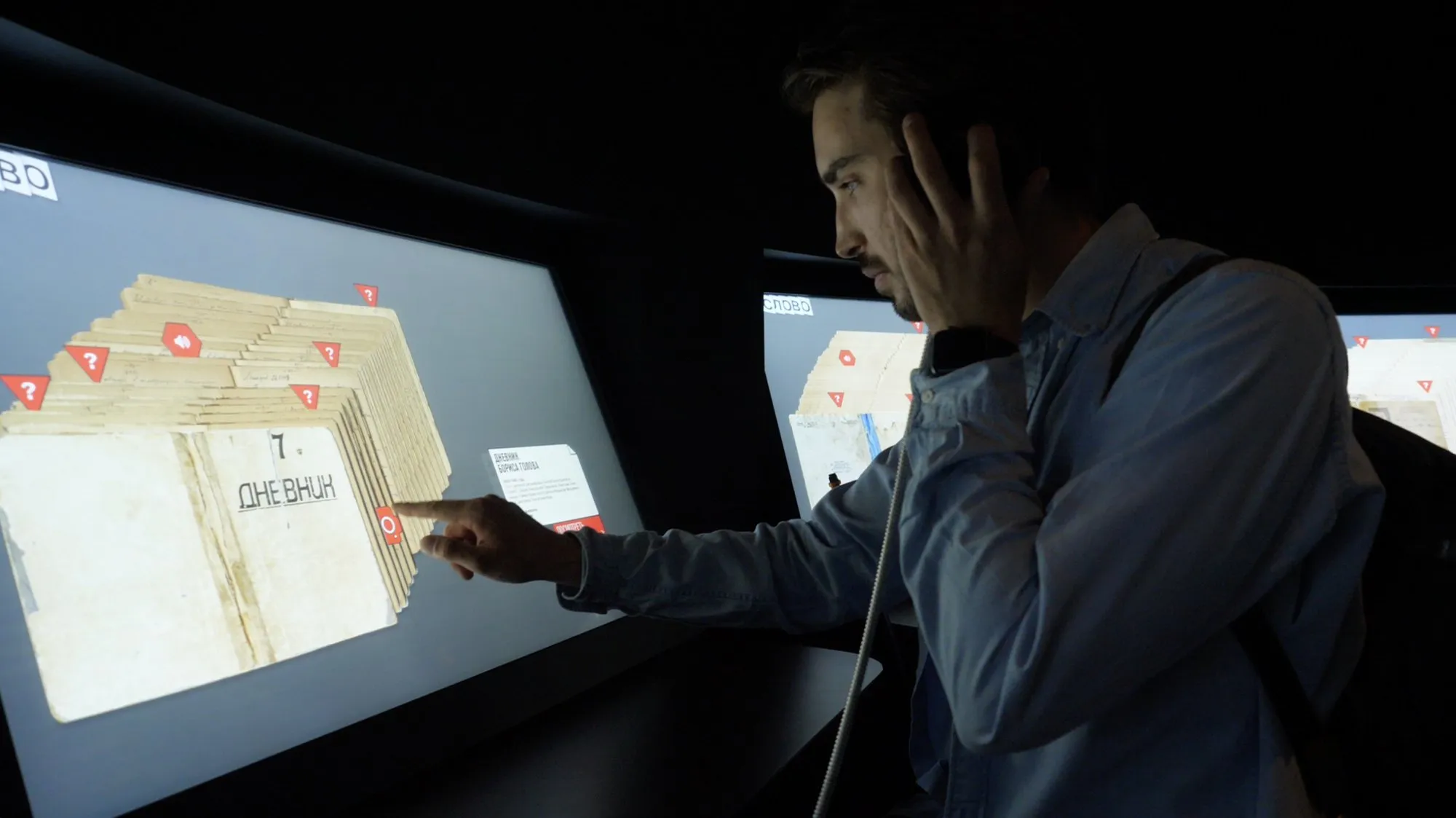
Multimedia installations, projection architecture, kinetic environments, sound design, interactive systems, and audiovisual storytelling were integrated into one interpretive framework allowing visitors to physically experience the evolution of communication itself. Language was treated not as static historical material, but as a living technological and cultural force continuously reshaping society.
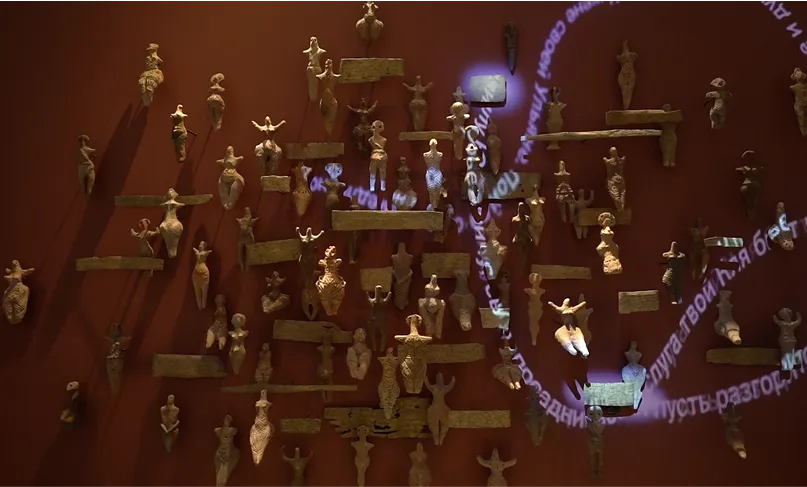
A major emphasis was placed on emotional and sensory translation of abstract concepts. Typography, sound, rhythm, spoken word, illuminated manuscripts, moving symbols, and spatial media environments were choreographed to transform linguistic history into embodied experience rather than academic explanation.
The exhibition also explored the political and symbolic dimensions of writing systems — revealing how alphabets become tools of religion, power, education, cultural continuity, and identity formation across different historical periods.
The result is not simply a museum about Slavic writing, but a spatial interface revealing how humanity stores thought, transmits memory, and constructs civilisation through systems of communication.
THE RESULT
The Museum of Slavic Writing became the first large-scale museum in Russia dedicated to language and communication systems as immersive public experience rather than purely academic historical display.
Combining heritage artifacts, multimedia storytelling, projection environments, interactive installations, sound dramaturgy, and spatial narrative systems, the project established a new model for translating abstract cultural infrastructures into emotionally accessible visitor experience.
More importantly, the museum demonstrated that writing systems can be interpreted not simply as linguistic tools or historical artifacts, but as technologies fundamentally shaping religion, governance, identity, memory, and civilisation itself.
The project transformed one of the most invisible human infrastructures — language — into a spatially understandable and emotionally resonant cultural experience for everyone.
The technical and multimedia solutions we integrated into this project received international recognition — our team became a finalist of the prestigious 2019 Heritage in Motion Award of the European Museum Academy for this work.