YEAR
2019
CITY
SARATOV
SERVICE
SPATIAL STORYTELLING
THE BRIEF
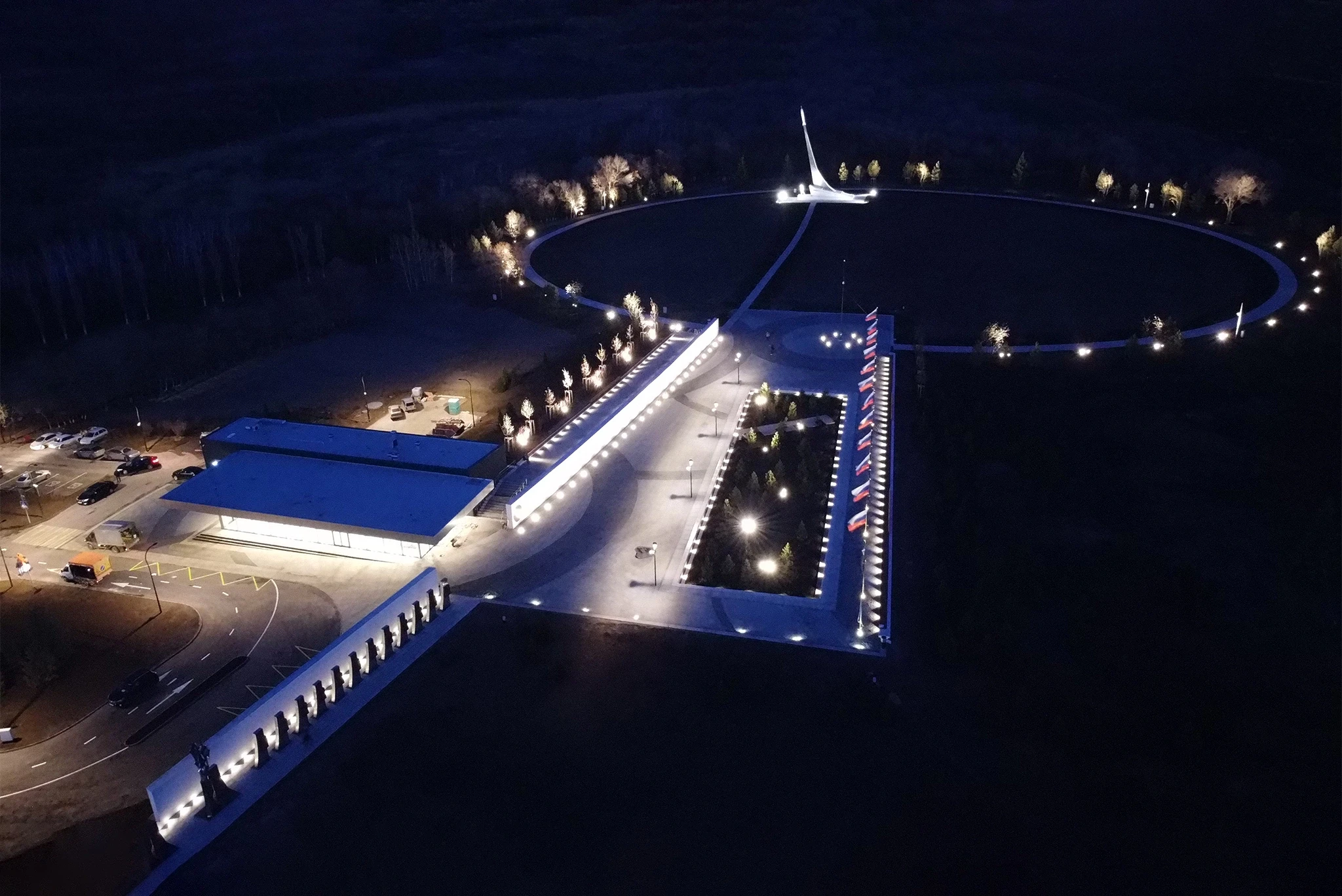
A memorial park at the historic landing site of Yuri Gagarin in the Saratov region — marking the exact location where the first human to travel to space returned to Earth in 1961. Spanning 19 hectares, the project transforms an open landscape into a large-scale narrative environment where history is experienced through movement rather than display.
The concept and narrative framework were developed by me as part of a collaboration between Pitch, landscape architecture practice WEST8, and the Moscow Centre of Urbanistics.
MY ROLE
I served as Researcher, Curator, and Creative Director for the narrative components of the park, working within a multidisciplinary team alongside landscape architecture practice WEST8 and the Moscow Centre of Urbanistics. I developed the conceptual and storytelling framework — including the 108 Minutes route logic, the relationship between the Wall of Glory and the experiential sequence, and the integration of the real radio communication soundscape into the spatial journey. My contribution was the narrative architecture of the park: defining what the experience should mean and how movement through the landscape should produce it.
THE CHALLENGE
A memorial park at a site of this historical significance carries an obvious risk: the gravitational pull toward monument-making — grand gestures that honour the event without making it felt. Gagarin's flight lasted 108 minutes. That number is precise, human, and finite — and yet the event it describes is almost impossible to comprehend in scale. The narrative challenge was to find a spatial and experiential logic that could hold both dimensions simultaneously: the intimacy of a single human experience and the magnitude of what that experience represented for humanity. The additional constraint was the landscape itself — open, flat, rural — with no existing architecture to anchor the experience or define visitor movement.

THE APPROACH
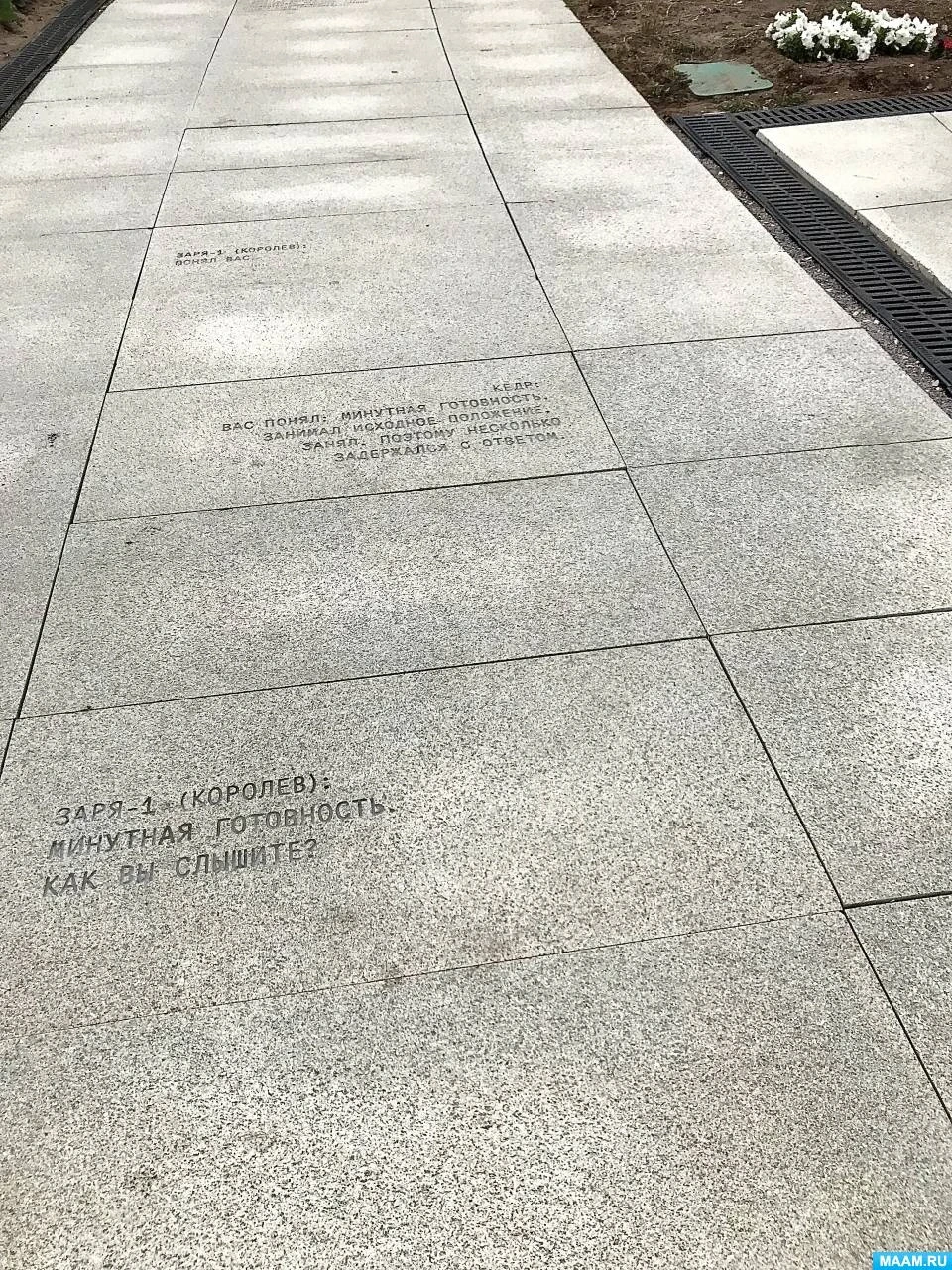
The conceptual move was to make time the primary spatial material. Rather than building monuments to the event, the design proposed that visitors physically retrace it — walking a 450-metre route structured around 108 engraved slabs, each representing one minute of Gagarin's flight. The route is not illustrative; it is durational. The time it takes to walk it approximates the time it took to change history. Each slab combines a milestone from the flight with an immersive soundscape drawn from real radio communications between Gagarin and ground control — so the experience of moving through the park is simultaneously the experience of moving through the flight itself.
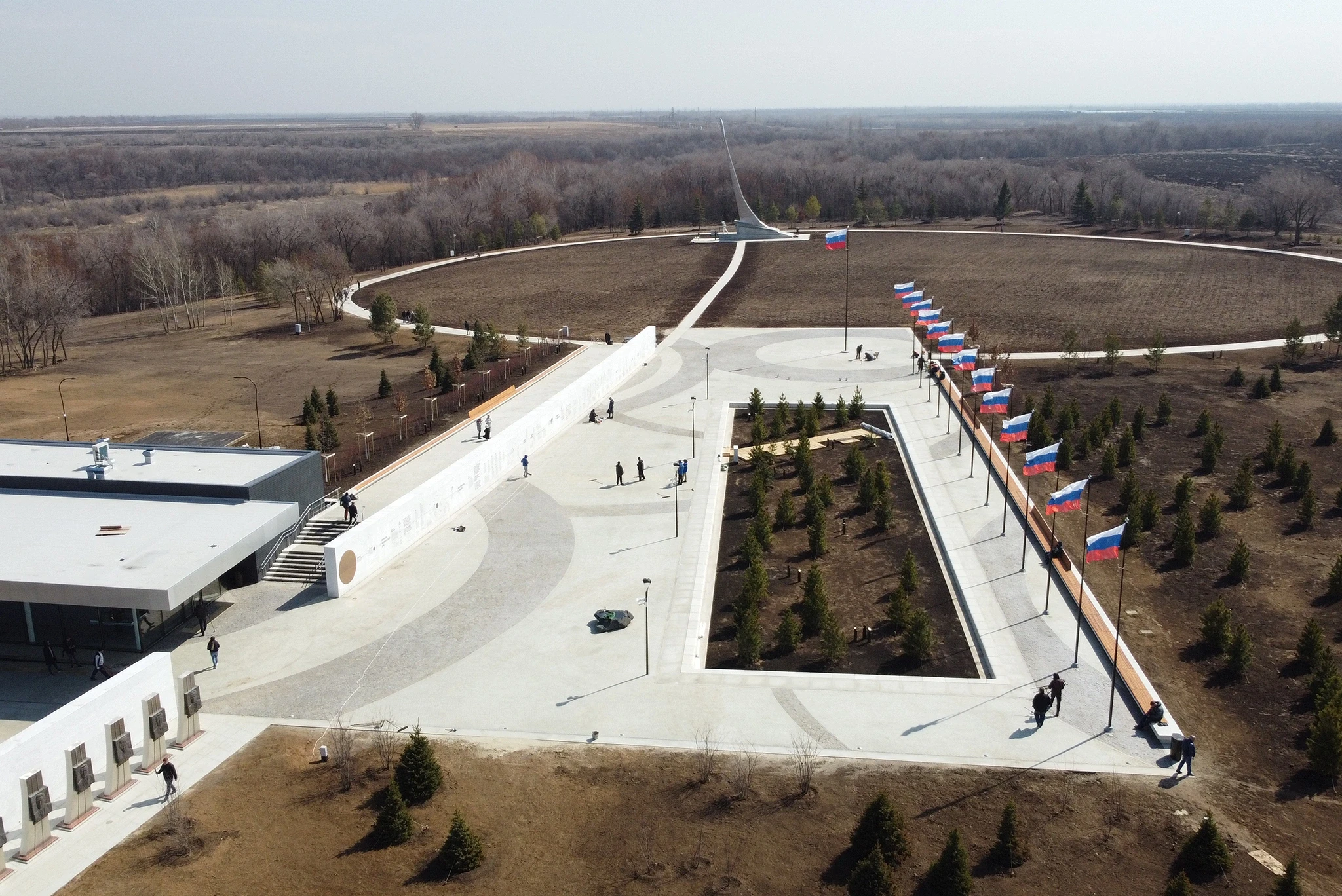
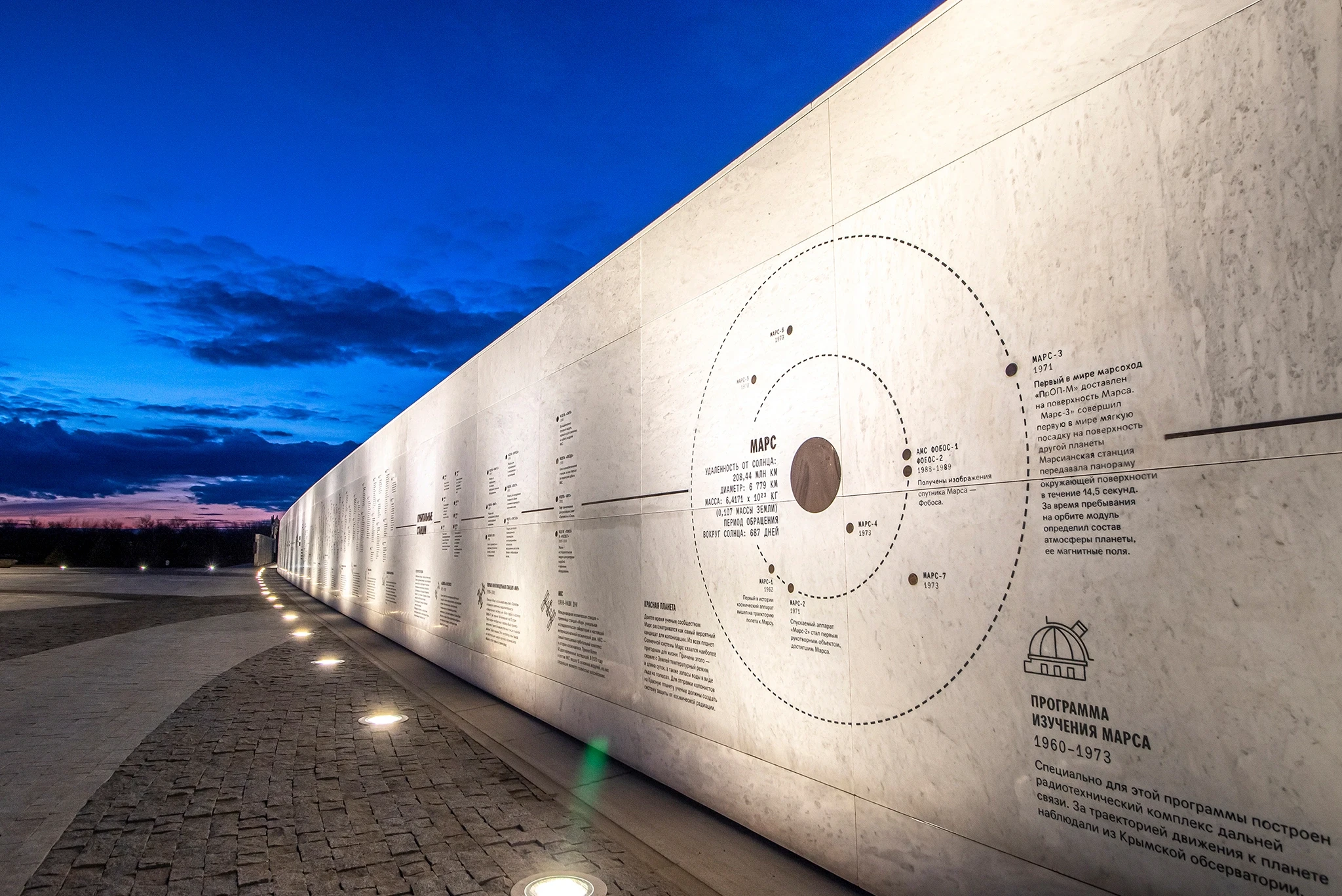
The Wall of Glory — an 84-metre granite structure — anchors the park spatially and institutionally, carrying bas-reliefs, scientific milestones, and the names of all 564 astronauts who had travelled to space at the time of opening. But the wall functions as destination rather than centrepiece: visitors arrive at it having already made the journey, which means they encounter it with a physical and temporal frame of reference that display alone cannot provide. The result is a memorial environment where the act of visiting and the act of commemorating are the same thing.

THE RESULT
The Space Conquerors Memorial Park opened at the Gagarin landing site in the Saratov region, establishing a permanent cultural destination at one of the most historically significant sites in the history of human exploration. The 108 Minutes route created a genuinely new format for memorial experience in the Russian landscape — not a museum, not a monument, but a spatial narrative where movement through terrain is the primary medium of commemoration. For developers and institutions commissioning cultural anchors at landscape scale, the project demonstrates that meaningful visitor experience does not require a building — it requires a concept precise enough to make open space legible and emotionally resonant.
The project was nominated for the international Golden Trezzini Award in the Landscape Architecture category and received extensive professional coverage in leading architectural media outlets.